Databricks Data Engineer Interview Coming Up?
Junior + Mid + Senior Databricks Data Engineer interview cheat sheets in one kit. One purchase, any panel, no expiry.
Get Interview Prep $29 + tax →100% refund, no questions asked
Already bought? Sign in

By Jakub Lasak
Databricks Data Engineer (ex-Uber)
Independent educational resource. Not affiliated with or endorsed by Databricks, Inc.
What’s inside
Junior, Mid and Senior in one web app. Same topics, the depth each rung is tested on.
Bootcamp answer vs. job-ready answer
10 deep-dives + 27 quick-reference
Knows-the-tools vs. understands-trade-offs
10 deep-dives + 28 quick-reference
Junior answer vs. senior answer
10 deep-dives + 29 quick-reference

What’s Inside
Every question comes with the answer calibrated to its level: what to emphasize, how deep to go, which trade-offs to volunteer.
$29
Get $300 of standalone value
Is $29 worth it if it helps you nail just one question in the round that decides your level?
Get Instant Access $29 →Paid Substack subscribers already have Interview Prep. Sign in with your Substack email.
Zero-Risk Guarantee
Use it for your interview. If you don't feel 10x more prepared walking in, email hi@dataengineer.wiki for a full refund - no questions asked. I make my living building Databricks pipelines for enterprises, not from your dissatisfaction.
Three Levels of Depth, One Library
Each level calibrated to what interviewers actually ask at that rung.
The Trap
You’re not sure what level you’re interviewing at. The JD says "mid," the recruiter hints "senior-ish," your friend at the company says "it depends on the panel." You need to prep for all of it.
You start prepping and realize: the same question gets different answers at different levels. “What’s a shuffle?” is a junior concept question, a mid tool-literacy question, and a senior strategic-override question. Picking the wrong depth tanks the interview.
You Google “Databricks interview questions” and find:
- ❌500-question dumps with no level calibration
- ❌Generic “data engineering” prep that ignores Databricks entirely
- ❌Senior-only content that flies over your head - or junior-only content that undersells you
- ❌Three different tabs open trying to figure out which answer fits
You’re guessing at the target and hedging your answers. Every hedge is a signal to the interviewer that you’re not sure of your level.
The Cost of Being Underprepared
Databricks interviews happen in weeks, not months.
The candidate who walks in with level-calibrated answers - knowing which parts to emphasize, which depth to hit, which trade-offs to volunteer - gives the interviewer exactly what that level is graded on.
The one who gives the same answer at every level - either too shallow or too deep - signals they don’t know where they stand. Polite rejection, regardless of how much experience they actually have.
The pay gap between the mid and senior rung at a typical US company:
$35K-$50K a year in total comp.
$29 + tax for all 3 levels, and you’re covered no matter which direction the interview goes.
Everything In One Web App
Junior, Mid and Senior together, each answer calibrated to what interviewers test at that level.
Interview questions
30 deep-dives (10 per level, each answered for its rung) + 84 quick-reference
Decision frameworks
If/then trees for the "it depends" questions, 5 per level
Red flags
The phrases that mark an answer a rung below, 15 per level
Behavioral STAR skeletons
From first contribution to cross-team influence
Questions to ask back
Reverse interview questions that show seniority
Day-of checklists
One plan for the day before, per level
One purchase, any interview. Whether they book you as junior, mid or senior, the answers are ready.
Same Topic, Two Levels of Depth
See how "what’s a shuffle?" changes from junior concept to senior strategic override.
Sample Question
“What happens during a shuffle, and when would you try to avoid one?”
“A shuffle is when Spark redistributes data across executors - it happens on wide transforms like groupBy or join. It’s expensive because it writes to disk and crosses the network. You avoid it by using broadcast joins when one side is small.”
Right for a junior role. In a senior interview, the same answer reads as a rung below.
“Shuffle avoidance is rarely the right framing - shuffle minimization is. I’d start by asking what’s actually slow: is it shuffle write size (data volume), shuffle read skew (one partition doing 80% of the work), or executor memory pressure from spill? Each has a different fix: repartition for skew, salting for hot keys, broadcast hint override when AQE is wrong…”
The senior answer starts from diagnosis, not from a technique.
Inside: 30 deep-dive questions, 10 per level, each answered at the depth its rung is tested on, plus 84 quick-reference questions.
Is This For You?
This is for you if…
- ✅You have a Databricks interview in the next 1-4 weeks
- ✅You’re not 100% sure whether the panel will treat you as junior, mid, or senior (and want to be ready for all three)
- ✅You’re leveling up (junior → mid, or mid → senior) and want to see exactly what the next rung looks like
- ✅You’re a tech lead or manager interviewing candidates and want to know what “good” looks like at each level
This is NOT for you if…
- ❌You need to learn production Databricks from scratch (this helps you articulate experience, not replace it)
- ❌You’re preparing for a non-Databricks platform
- ❌You want a full interview course (this is rapid emergency prep)
- ❌You need SQL basics or Python fundamentals
Who’s Behind This?
I’m Jakub - a Databricks Data Engineer (ex-Uber). I help Databricks engineers advance to every level - junior, mid, and senior - by teaching them how to interview, execute, and think like the next rung.
Tested by 16,900+ Data Engineers
This isn’t theoretical advice written by a ghostwriter. I write for over 16,900 Databricks Data Engineers. Every framework here is built from production Databricks work and validated by the community at every career stage.

Recognized by Databricks Leadership
My technical breakdowns have caught the attention of Databricks co-founders. Reynold Xin, Databricks Co-founder, shared my Liquid Clustering deep-dive and called it "a really great overview." The technical depth you’re getting here is architecturally sound at every level.

Built From 4.4M+ Impressions
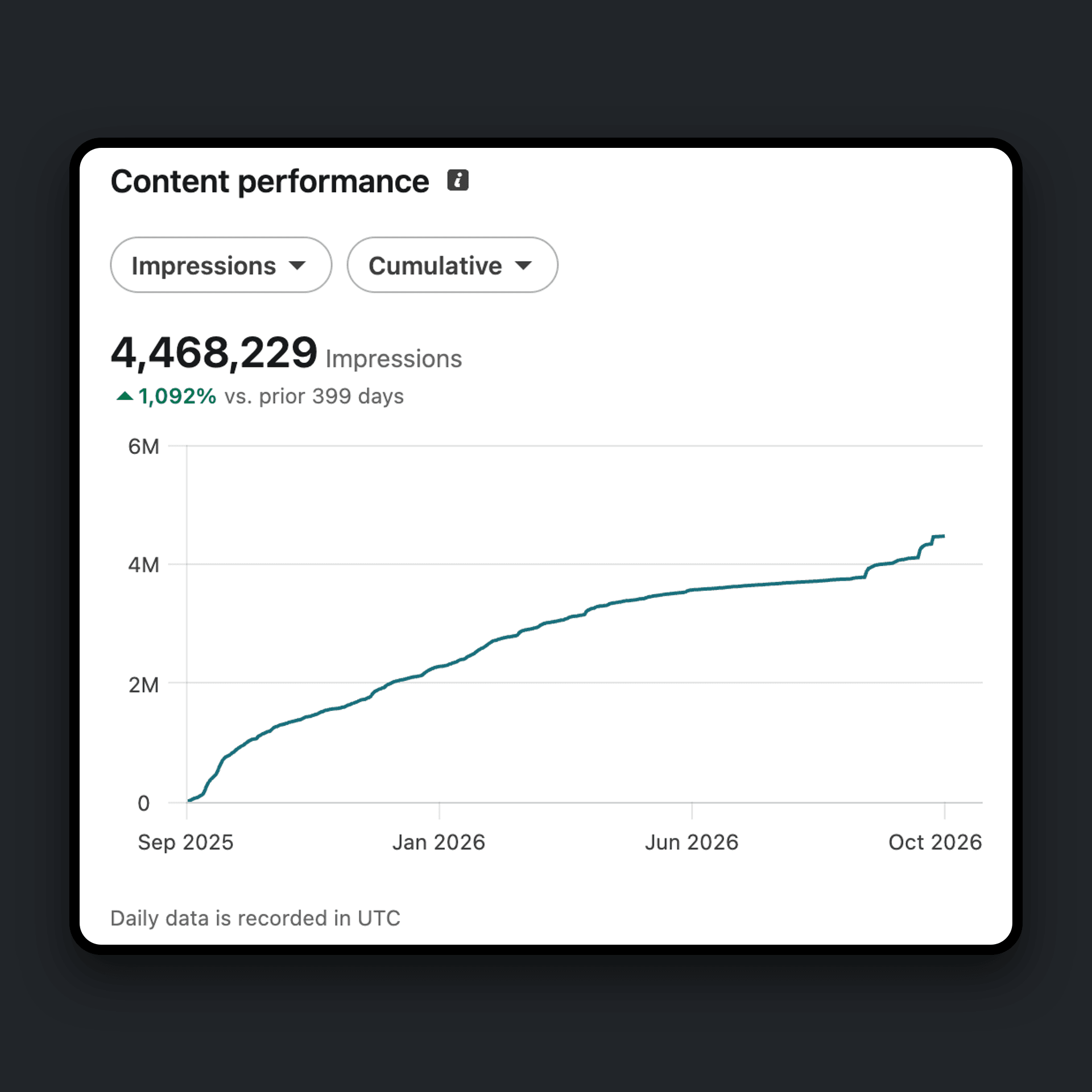
The foundation of Interview Prep wasn’t formed in a vacuum. It was built on content that generated over 4.4M impressions in the Databricks community across juniors, mid-level engineers, and senior ICs.
If Interview Prep tips ONE interview answer from “no” to “yes,” the return is $20K-$60K in year-one salary.
$29 + local tax (VAT/GST) where it applies, for Junior, Mid and Senior. Yours to keep, with every update to the library.
Junior + Mid + Senior For any interview level
$300 of standalone value
Paid Substack subscribers already have Interview Prep. Sign in with your Substack email.
Delivered as an Interactive Web App
Not a static PDF. One app, three levels, level switcher built in.
Zero-Risk Guarantee
Use it for your interview. If you don't feel 10x more prepared walking in, email hi@dataengineer.wiki for a full refund - no questions asked. I make my living building Databricks pipelines for enterprises, not from your dissatisfaction.
Frequently Asked Questions
Why all three levels instead of just mine?+
Two reasons. One: recruiter JDs rarely say which rung the panel will hold you to, so being ready one level up and one level down covers you. Two: the levels read as a promotion roadmap - you see exactly how the same topic shifts from concept to trade-off to architecture as you climb.
How are the levels different from each other?+
Each level tests a different capability. <strong>Junior</strong> is bootcamp-vs-job-ready - concept awareness and basic production patterns. <strong>Mid</strong> is knows-the-tools-vs-understands-trade-offs - decision-making and operational ownership. <strong>Senior</strong> is junior-vs-senior - architectural reasoning and systematic diagnosis. Same topics, different depth.
I bought a single level before. Do I need this?+
Your access stays exactly as it is. If you want the other two levels, this is the way to get them: all three levels for $29, or $24 if you came here from an older link.
What format is it delivered in?+
Interactive web app - not three static PDFs. Level switcher to jump between Junior, Mid, and Senior, per-question checkboxes, dashboards per level, and “continue where you left off.” Searchable, bookmarkable, works on any device.
What if I have a question about the content?+
Reply to any email from me. I read every reply and respond personally.
$29. The cost of showing up unprepared is much, much higher.
Get Instant Access $29 →